Non-traditional tradespeople deserve safety
in the workplace, and in the world.
Disclaimer: This post discusses gender-based violence.
By: Kelly Sandman Board PresidentI can't stop thinking about Amber Czech, a 20 year old welder who was murdered by her coworker on November 11th, 2025 in Minnesota. The man who murdered her told police that he’d been planning to kill her for a while because he “didn't like her.”
I mourn that Amber’s life was taken from her. I mourn that she went to work for a typical day and never came home again. I mourn for her family and friends.
Not long after this tragedy, I spoke with a woman I met through Tradeswomen of Maine who’d been a diesel mechanic in Antarctica for a year. She loved the work, but didn’t return because of threats from a co-worker. She received no support or protection from her employer. In fact, after reporting it many times, she witnessed no change or action at all, other than his threats increasing because she’d reported it. The system she was in condoned violence through inaction. She resorted to carrying a hammer with her at all times to protect herself because…
violence begets violence.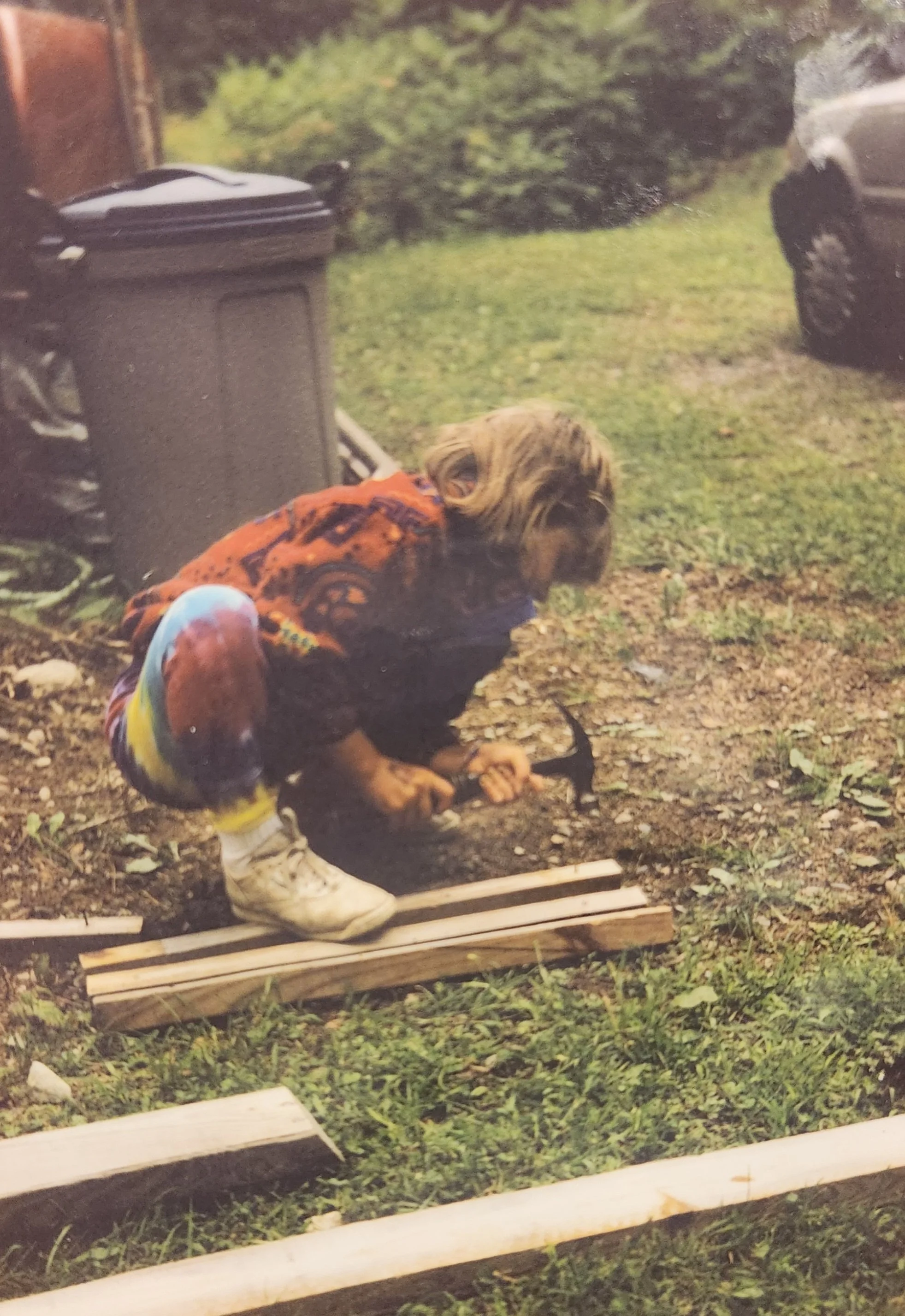
am I actually ushering folks into an unsafe space?
My professional life as a female tradesperson and my work with We Built This are so important to me, and I love creating safe spaces for folks who don’t fit the stereotype of a dude carpenter to learn the trades.
Sadly, violence in the workplace is not uncommon. Statistics show that in the US victims are equally split between male & female, but 83% of the perpetrators of workplace violence are male.
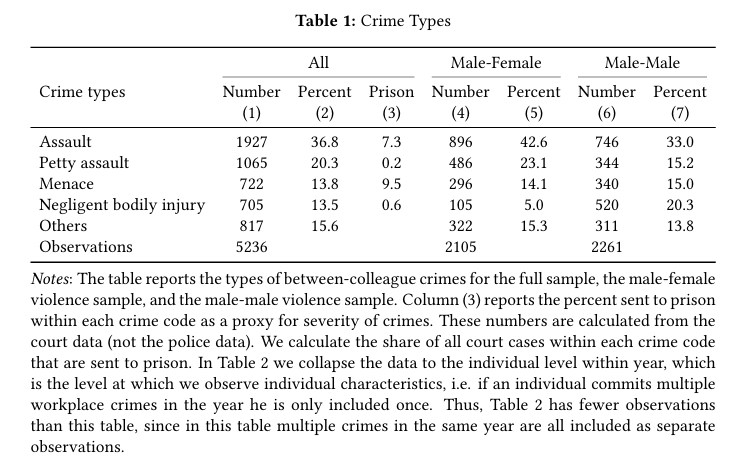
Statistical analysis from Violence Against Women at Work by Abi Adams-Prassl, Kristiina Huttunen, Emily Nix, and Ning Zhang published by Washington State University in 2022.
Violence against women, particularly women of color and members of the LGBTQ+ community, is everywhere. A member of our own trades community in Maine, Sunny Stewart, was murdered while paddleboarding in July of 2025. Just last month, in Maine, Makayla Rose Desantis was shot to death in her apartment by her longtime boyfriend. In her book Men Explain Things to Me, Rebecca Solnit reports that domestic violence happens every 8 seconds in the U.S. Over 95% of these are committed by men. The biggest cause of death to pregnant women is her male domestic partner. Most mass murderers and mass shooters are male-identifying. Violence against women is cultural. And acts of violence occur every day on job sites that don’t result in death or get filed in police reports and sent to trial.
This begs the question: what, exactly, drives violence against women and non-traditional tradespeople?
In her book For the Love of Men, Liz Plank explores masculinity, examining how men are often socialized from a very early age to assert dominance and suppress emotions to prove their strength. This behavior is constantly policed by our society from a very early age. Brené Brown, a researcher and storyteller, who studies courage, vulnerability, shame, and empathy, famously spoke about learning that toxic masculinity is upheld by women and girls as much as, if not more than, men and boys themselves.
Our society has come a long way in terms of encouraging women to pursue their ambitions and not to conform to traditional norms of nurturing and docility. Women are now celebrated for thriving in sports, and women’s leagues are striving for income parity with men’s leagues, building on years of work by activists like Billy Jean King. In my 50 years in this world, I have consistently been told “You can do anything a boy/man can do” and have been celebrated for breaking the mold. I acknowledge that I am white, and that women of color of my age may not have had the same experience. It is widely known that the women’s liberation movement did not empower all women equally.
even as gender norms evolve, we continue to receive incessant messaging about what is and is not acceptable gendered behavior.
With the rise of the #MeToo movement (founded by a Black woman, Tarana Burke, and later co-opted by mainstream/white Hollywood), what is considered acceptable male behavior has changed, mostly for the better. There is now a much longer list of things not to do, yet still too few models of modern, progressive masculinity.
Imagine a world where boys and men are told, “you can do anything a woman can do!” What would that empower them to do differently? What if we celebrated different things for the embodiment of masculinity? What if it was valued for a man to be a great nurturer, to have deep and sweet and intimate male friendships, to have emotional intelligence and great communication skills?
“To be ‘feminist’ in any authentic sense of the term is to want for all people, female and male, liberation from sexist role patterns, domination, and oppression.”
Police reports suggest that Sunny Stewart’s accused murderer had suffered abuse at the hands of an adult male in his household at the age of 15. Those same reports suggest that he had perpetrated violence against an adult female in his household in the time since his own abuse. I do not know for sure what this human experienced in his youth, but as an act of imagination: what if this boy had been nurtured differently? What if he’d been allowed to express pain, sadness, uncertainty, tenderness? What if the men in his life had been able to model vulnerability, tenderness, and love? What if his behavior had been shaped by non-violent means? What if he’d been taught that his value lies in cooperation and care rather than domination and violence?
Our culture extends help in the form of diagnoses for individual perpetrators of violence, but what of our culture’s sickness? Anthropologist, T.M. Luhrmann published Hearing Voices in Different Cultures: A Social Kindling Hypothesis (2015). Her research suggests that in the U.S., people who meet the criteria for a schizophrenia diagnosis often hear voices encouraging violence against others. In India, people who hear voices say that the voices offer them positive guidance and tell them to clean.
In the U.S., we are steeped in news of violence and war and domination. Every day, I read about our conflict with Iran. Last month I read about the killing of Ayatollah Khamenei along with many of Iran’s government officials by U.S. bombs. In war, we don’t call this “murder”, instead we call it “justice.” Can killing really ever be justice or liberation? Mohandas Gandhi, one of the greatest advocates for non-violence in the 20th century, believed in aligning our means with our ends.
If we strive for peace, we cannot get there by war.
If we desire truth, we can not achieve that with lies.
If we desire inclusiveness and love, we cannot get it with exclusion and hate.
We all desire safety, belonging, authenticity, community; we can’t get closer to these with exclusion, violence, or hateful resistance. We can not achieve safety with threats. We cannot achieve security with destabilization.
We must continue to widen the spaces of safety and authenticity for all humans of all races, ethnicities, religions, and gender identities. Opening up spaces of safety for the most vulnerable will afford more safety and space for everyone. Let’s examine masculinity and define not what a “real man” is, but a “good man,” as Liz Plank concludes in For the Love of Men, and embrace those as possible standards for everyone, including male-identifying folks. We must make it so a woman of any color or member of the LGBTQ+ community can be a diesel mechanic in Antarctica or a welder in Minnesota or a carpenter in Maine or a human in any role anywhere and not fear for their life.
What might the world be like if any human, regardless of gender and color, could safely exist in any way that aligns with their heart?
We live in a society steeped in news of violence and domination, yes, and we also live in the most peaceful time statistically in history. The media feeds us harrowing stories of murder and hate, but we are also steeped in strident beauty, great acts of bravery and generosity, vibrant community, and powerful love. My life is full of sweet, tender, sensitive, thoughtful, emotionally connected humans who land everywhere on the gender spectrum who are earnestly trying their best. We can strive to move through the world in peaceful and transformative ways, affecting everyone we come into contact with for the better.
That is why I continue my work with We Built This: to create safe spaces in the trades for all humans, regardless of their gender identity, sex, sexuality, race, physical form, and physical ability.
I’ll continue to educate myself on how racism, sexism, and misogyny live in me, and how I unwittingly support systems of oppression in our society so I can walk a different path, supporting everyone’s humanity, knowing that there’s enough room for all of us here. I’ll grant myself grace in this process, knowing that I’ll never be perfect despite my best intentions, and I’ll extend that same grace to others whose actions feel hurtful, especially as I engage with them on those hurtful actions, knowing they are doing their best too. I cannot change the whole world, even as my heart longs to, but I can affect the spaces I inhabit. To paraphrase Gandhi, I can be the change I long to see in the world.
Resources that inspired these thoughts that I highly recommend:
A TED Talk by Brene Brown on Listening to Shame
Tarana Burke Unbound
bell hooks Feminism Is for Everybody: Passionate Politics & Ain’t I a Woman
Liz Plank For the Love of Men
Kenji Yoshino Covering
Rebecca Solnit Men Explain Things to Me