Building Community: Through Our Community Agreements
By Veronica Newport
Board Member
When people attend a carpentry or woodworking class, they often think about the tools and materials required to develop their technical skills.
When people attend a We Built This workshop they soon discover that the most important tools for learning are less obvious.
Inclusivity, trust, respect, curiosity, teamwork, and belonging.
These are the foundations that allow people to show up, ask questions, take risks, make mistakes, learn, grow, and succeed.
We don’t expect our participants to create these spaces without our guidance.
Signing up for a woodworking class without knowing anyone, in a new place, and with limited experience is already vulnerable enough!
Our instructors help curate an inclusive learning environment with our Community Agreements.
Our Community Agreements are a shared commitment to how we show up for one another in our workshops, programs, and community spaces. They reflect the kind of learning environment we want to build—one where people feel welcome, respected, supported, and empowered to learn from each other.
Inclusivity
〰️
Trust
〰️
Respect
〰️
Curiosity
〰️
Teamwork
〰️
Belonging
〰️
Inclusivity 〰️ Trust 〰️ Respect 〰️ Curiosity 〰️ Teamwork 〰️ Belonging 〰️
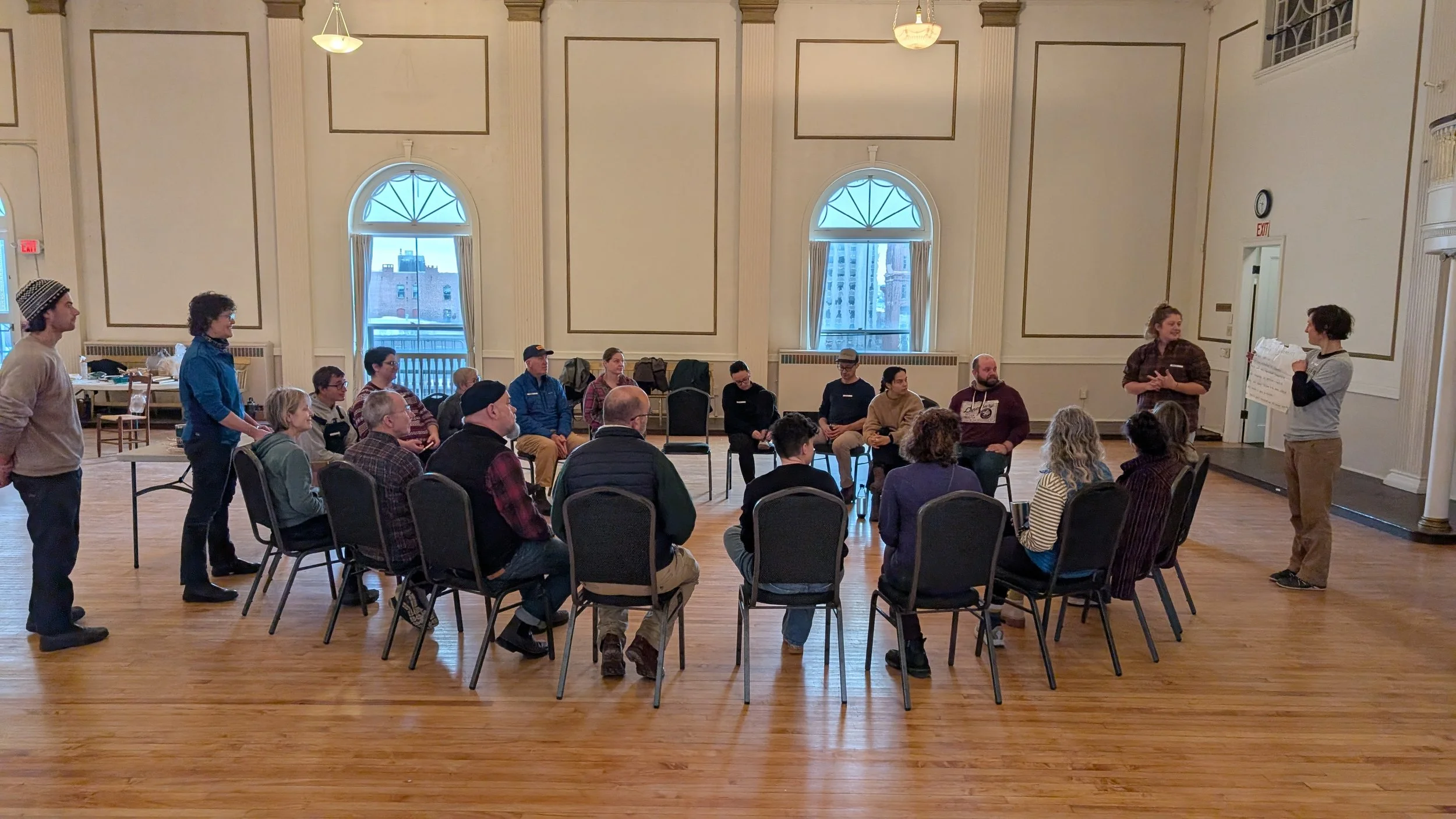
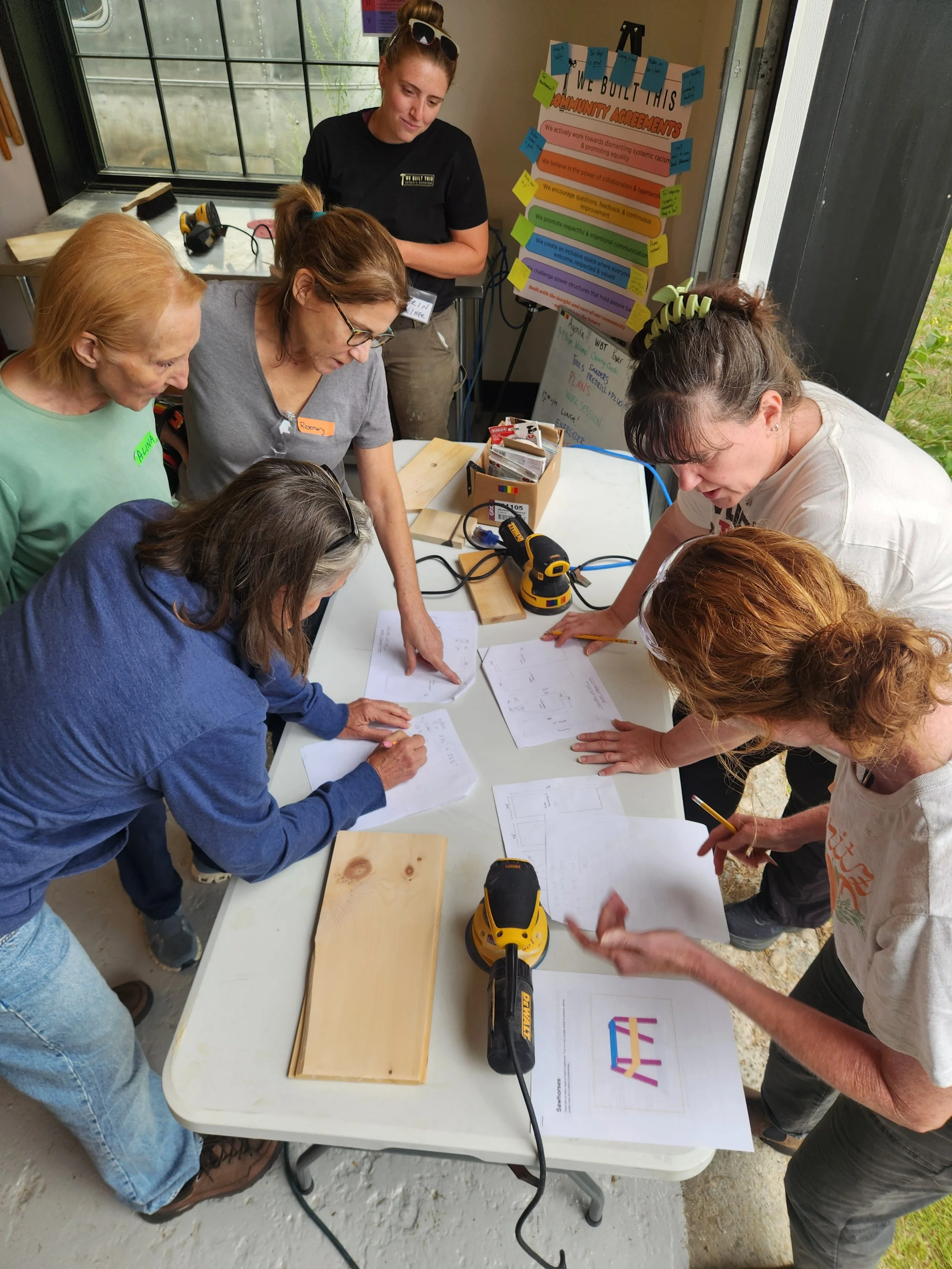
Participants engaging in the Community Agreements discussion at the start of the workshop.
-
Trade education has not always felt accessible or welcoming to everyone. Many people enter our workshops carrying different experiences, identities, confidence levels, and relationships to learning. Some participants are picking up tools for the first time. Others bring years of experience. Some are eager to jump in, while others may be working up the courage to ask a question.
-
Rather than assuming everyone shares the same expectations, we use our Community Agreements to clearly articulate the values that guide how we work together. These Community Agreements help establish a shared framework for learning, collaboration, feedback, and participation.
-
One of the most significant changes that emerged from this feedback was restructuring the agreements into two parts: What We Ask of Participants and What We Commit to Participants.
This shift helped us recognize something important: Community Agreements should never be one-sided. If we ask participants to engage with openness, respect, and accountability, we must hold ourselves to those same standards. This opens an opportunity for us to consider, develop and support new structures within our organization for our instructors. We commit to providing guidance, opportunities for feedback and support to all parties responsible for upholding these agreements.
Created by our Community
From the beginning, we knew we didn't want a list of agreements that was written behind closed doors and presented as final. Instead, we started with a draft and invited people into the process. We shared our ideas through community discussions and virtual feedback conversations, asking participants what resonated, what was missing, and what could be improved. We also sought feedback from our collaborative partners in the industry who help shape and support our work.
The feedback was thoughtful, honest, and incredibly valuable.
Community members encouraged us to:
Use simpler, more accessible language.
Focus on clear, action-oriented statements.
Use language that is empowering and constructive.
Separate our organizational commitments from participant expectations.
In many ways, the process we chose reflected the very values we were trying to capture. We practiced collaboration, curiosity, respectful dialogue, and continuous improvement while creating the agreements themselves.
“I can truly feel the community’s contributions throughout this [Community Agreement development] work.”
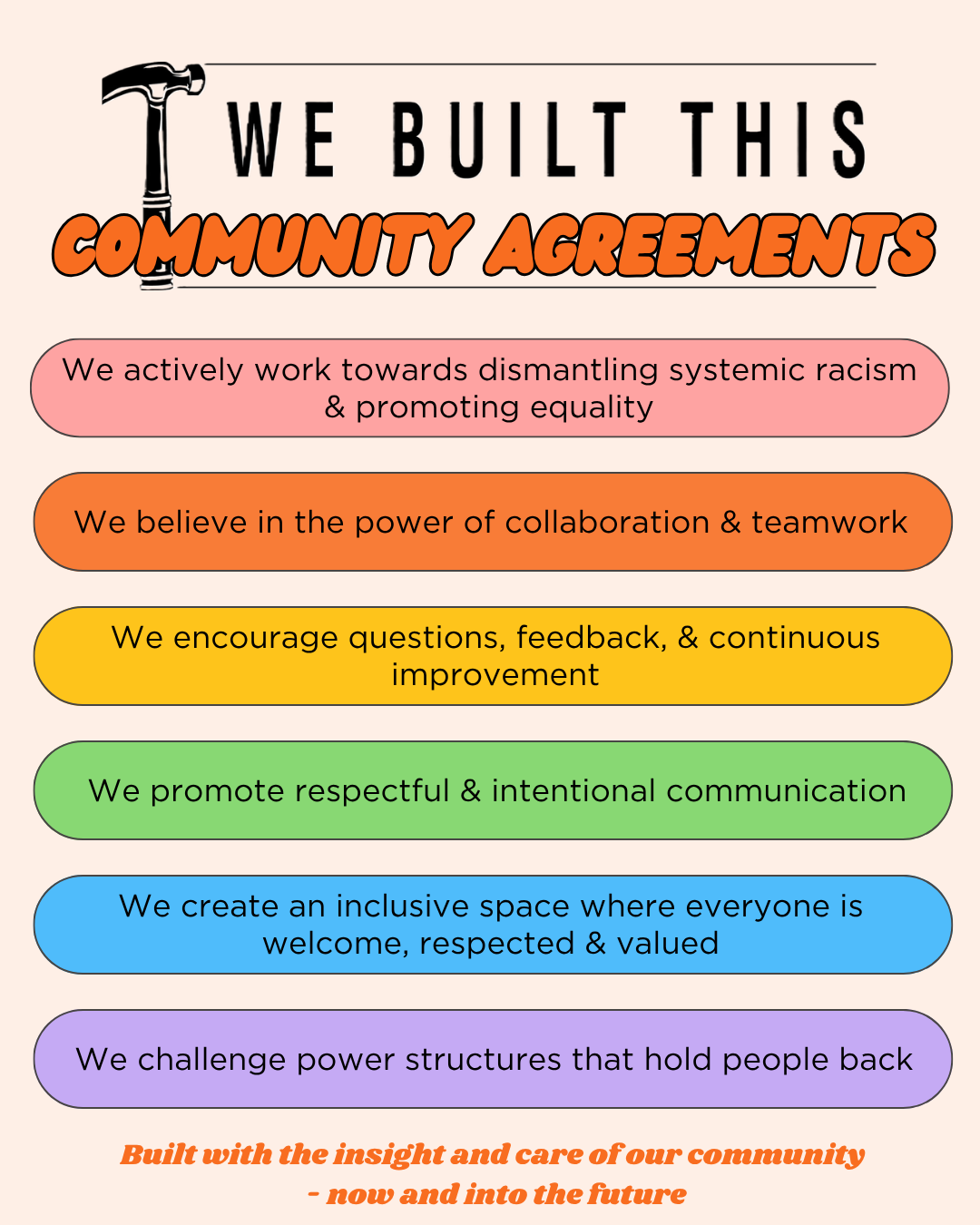
These agreements are not intended to be a list of rules, but a shared commitment to the kind of community we want to create together. They remind us that learning happens best when people feel like they belong and are safe to ask questions. That diverse perspectives make us stronger. Everyone deserves to be treated with dignity and respect. And building a more inclusive future in the trades requires intention, accountability, and collaboration from all of us.
These Community Agreements will be an active part of every workshop, not simply a document that sits on a shelf. Participants will receive a copy before each workshop so they have an opportunity to review them in advance. During workshops, the agreements will be displayed in the learning space for reference, and a visible reminder of our shared commitments. We will take time at the start of each workshop to review the Agreements with participants and invite conversation about what they mean in practice. Community Agreements are only meaningful when they are actively practiced, and we see them as a starting point for building trust, setting expectations, and creating a space where everyone can learn, contribute, and feel a sense of belonging. By making space for dialogue, we hope to ensure the agreements remain meaningful, relevant, and grounded in the community they are intended to support.
Our Community Agreements:
Anti-racism
Collaboration and teamwork
Respectful and intentional communication
Questions, feedback, and continuous improvement
Inclusion and belonging
Equity and challenging systemic power dynamics
A Living Commitment
While we're excited to introduce these Community Agreements, we don't see them as a finished product. Like our organization, our workshops, and our community, they will continue to evolve. We remain committed to listening, learning, and improving as we grow. Most importantly, these agreements belong to the community that helped create them. They are the result of many conversations, many perspectives, and a shared belief that learning environments can be both skill-building and deeply human.
Thank you to everyone who shared feedback, challenged our thinking, and contributed to this process. We are proud of what we built together, and we're excited to continue putting these agreements into practice.